
ALL ABOUT WAIPIO VALLEY LOOKOUT IN HAWAII
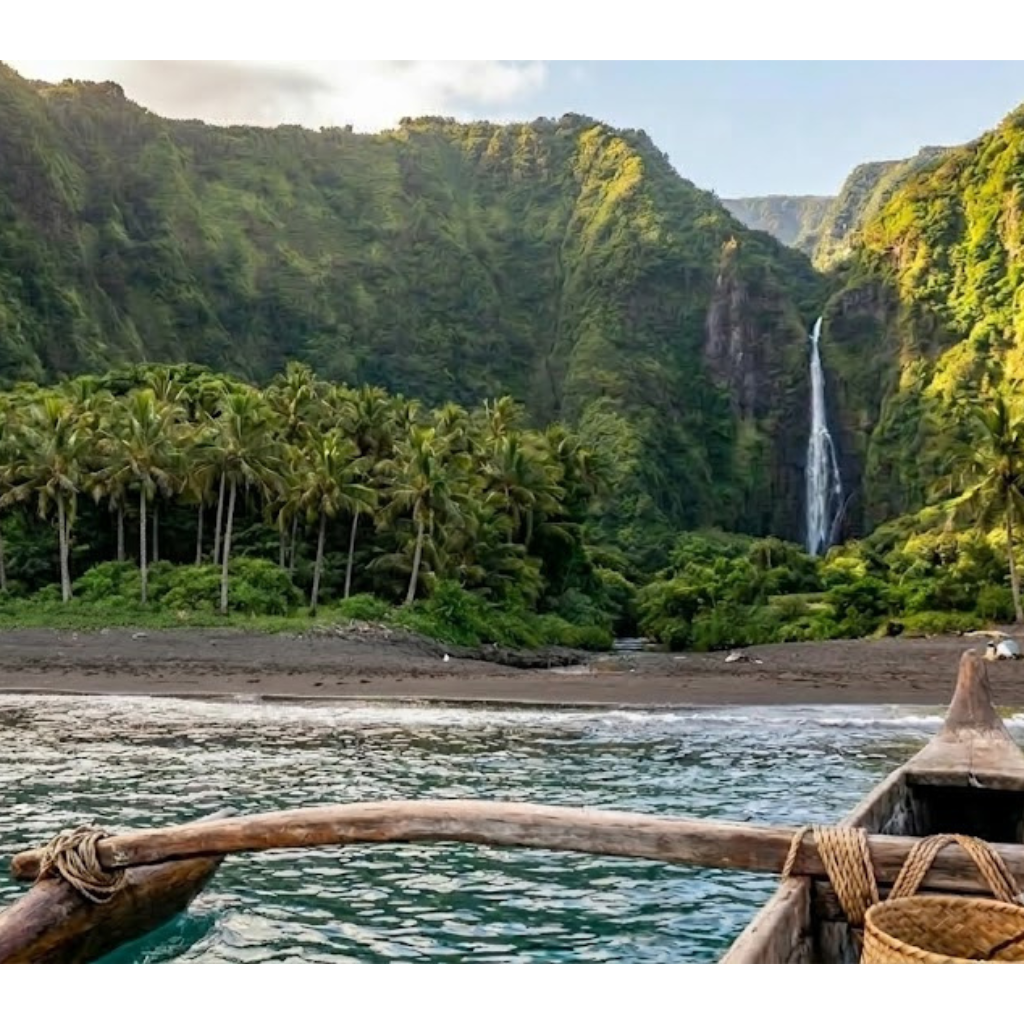
If you’ve started researching the Big Island, you’ve probably come across photos of a vast green valley dropping to the ocean between towering cliffs. That’s Waipi’o. And if you want to understand all about Waipio Valley lookout in Hawaii before you arrive, including what you’ll see, what the history means, and how access actually works right now, this guide covers everything.
All About Waipio Valley Lookout in Hawaii: What Is Waipio Valley and Why Does It Matter?
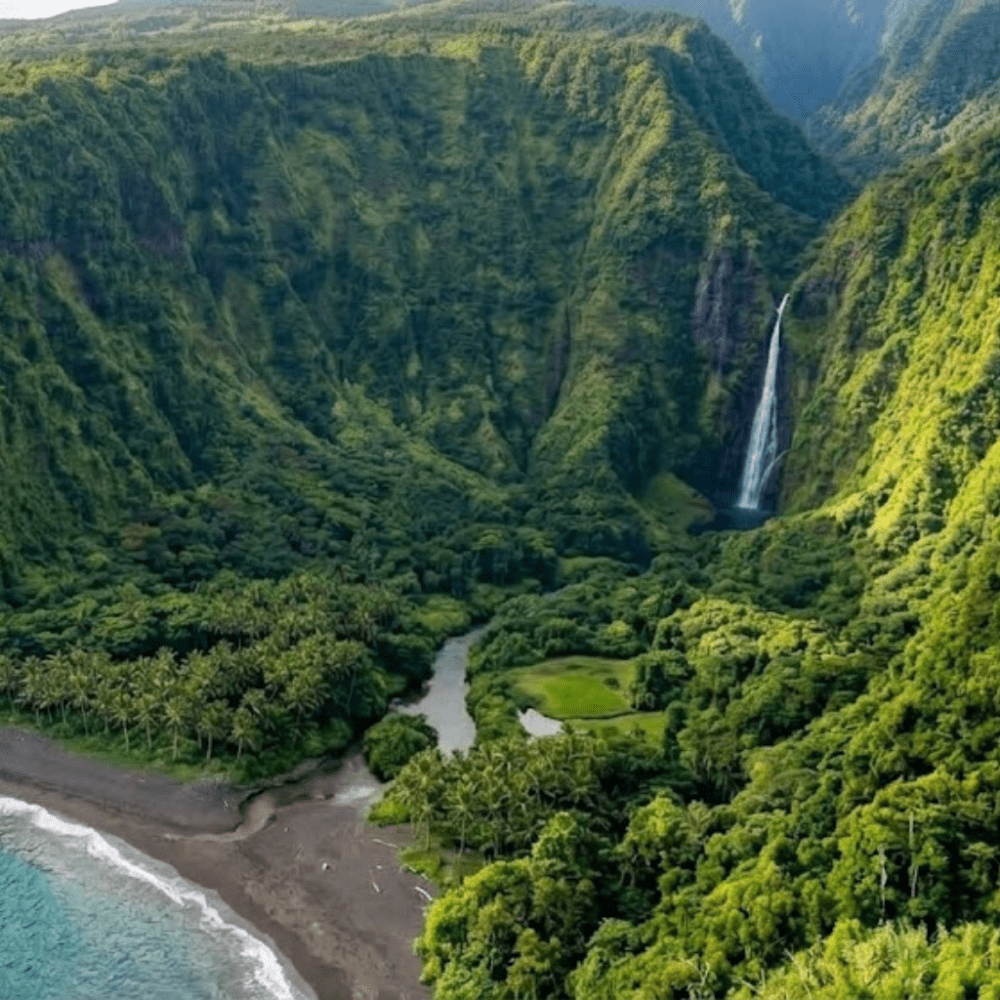
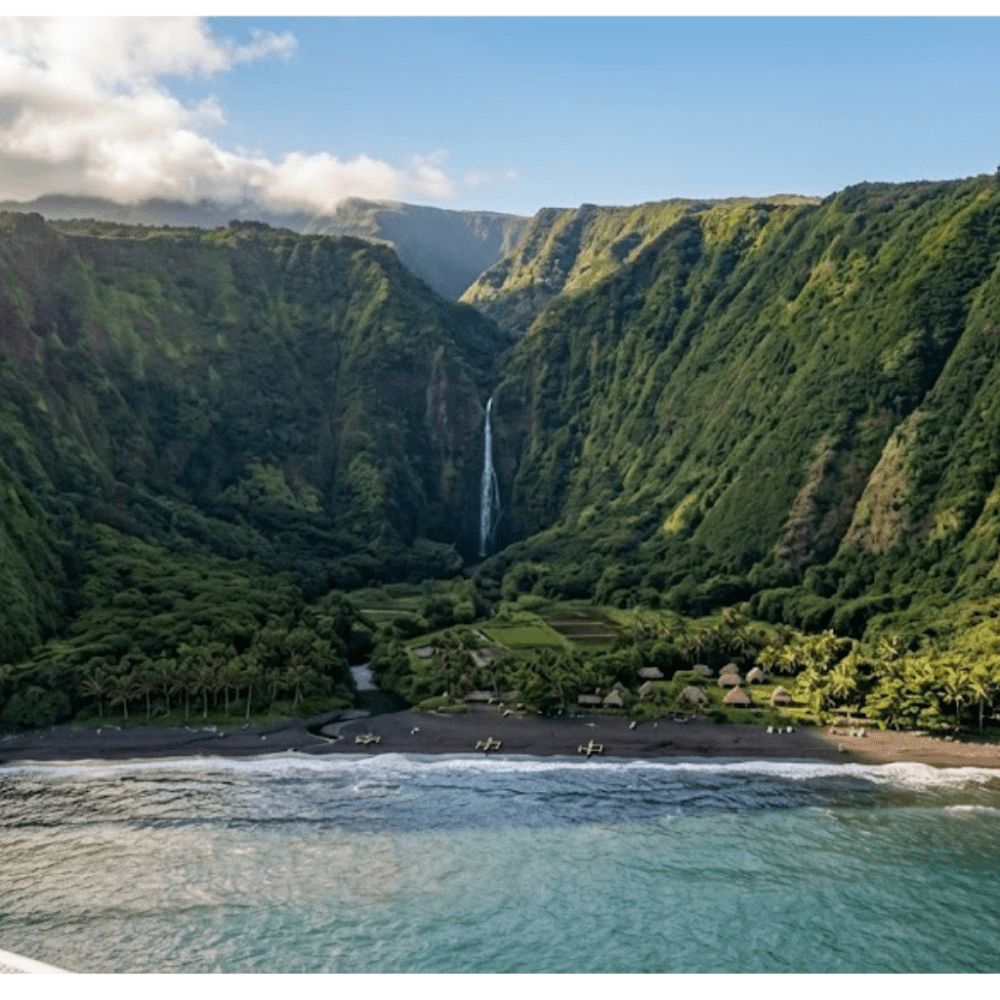
Waipi’o translates from Hawaiian as “curved water,” a name that reflects the rivers and streams that wind across the valley floor before they meet the ocean. The valley sits on the Hamakua Coast of Hawaii Island, roughly 50 miles north of Hilo. It runs six miles from the ocean to the back wall, flanked by sea cliffs that rise to 2,000 feet on either side.
From the lookout, you see Hi’ilawe Falls plunging more than 1,000 feet down the valley’s back wall. You see taro fields spread across the valley floor, a black sand beach where the rivers meet the sea, and cliffs that extend west as far as the eye can follow.
Hawaiians have called it the Valley of the Kings for centuries, and that description has never been informal. Waipi’o was the political and spiritual center of the Hawaiian archipelago for generations of ali’i.
The History of Waipio Valley: From Ancient Hawaii to Today
Long before Western contact, Waipi’o served as the seat of power for the highest-ranking ali’i on the island. King Liloa governed Hawaii Island from this valley. His son Umi-a-Liloa later unified the island’s warring chiefdoms after a period of conflict. Both men left significant marks on the valley’s landscape, including heiau that still stand on the valley floor today.
Kamehameha I spent part of his childhood in Waipi’o and trained here as a young warrior. The valley’s resources, its fish, taro, and freshwater, supported large populations throughout the era of traditional Hawaiian society. Historians estimate that tens of thousands of people lived in and around the valley at its peak.
The 19th and early 20th centuries brought significant change. Chinese and Japanese farming communities established themselves in the valley after the decline of the Hawaiian population. They grew taro, rice, and other crops, and the valley remained agricultural through much of that period.
Two tsunamis fundamentally altered the valley’s demographics. The 1946 tsunami destroyed much of what stood on the valley floor. The 1960 tsunami, generated by an earthquake in Chile, struck again and pushed the remaining population out. Today a small number of families live in the valley permanently, most of them taro farmers who maintain the lo’i kalo that define the landscape.
The Cultural and Spiritual Significance of Waipio Valley
Waipi’o is what Hawaiians call wahi pana, a storied and sacred place. The valley holds a concentration of mana, the spiritual power that Hawaiians understand as present in land, water, and the ancestors who shaped both. Few places in Hawaii carry that weight as tangibly as this one.
In Hawaiian mythology, Waipi’o connects to Lua-o-Milu, the realm of the dead that lies beneath the valley. Deities including Lono and Kane hold associations with the valley’s water and fertility. The heiau built here were not ceremonial monuments for display. They were functional centers of spiritual practice, some of which served as sites of sacrifice and prayer for generations of ali’i.
When you visit, the valley asks for respect. Many of the residents who remain there today maintain deep cultural and family ties to the land. The protocol that governed how visitors entered and behaved in Waipi’o was taken seriously in ancient Hawaii, and that hasn’t changed.
What You See From the Waipio Valley Lookout
The lookout itself sits at the top of the valley road in Honokaa. You park in a small lot, walk a short paved path to the viewing area, and the valley opens below you in full.
The view covers the entire valley floor at once. You can see the patchwork of taro fields and the rivers that feed them. Hi’ilawe Falls drops visibly along the back wall even from this distance. The black sand beach marks where the valley meets the Pacific, and on clear days the cliffs to the west extend past the reach of the valley road itself.
After heavy rain, Kaluahine Falls appears on the west cliff wall. It’s a seasonal waterfall that forms when runoff builds above the valley rim and it adds a second ribbon of white to the view.
The lookout has a parking area, restroom facilities, and interpretive signage that provides context on the valley’s history and ecosystem. Access to the lookout is free and open to all visitors, with no permit or reservation required.
Current Access Rules for Waipio Valley Road
The road down into Waipi’o is among the steepest paved roads in the United States, and in February 2022 the County of Hawaii closed it to general public access following geotechnical assessments that identified significant rockfall and slope instability risks.
As of March 2026, those rules remain in effect. Visitors cannot legally drive or hike down the valley road. The County of Hawaii partially restored access in September 2022 for Big Island residents with valid Hawaii ID, Native Hawaiians exercising traditional and customary rights, and county-permitted commercial tour operators using covered 4WD vehicles. All other visitors are restricted to the lookout.
Attempting to walk or drive down the road without authorization is a trespass under the current emergency rules. The signs at the top of the road mark the rules for Waipio Valley’s open status, and enforcement has increased since the restrictions took effect.
This matters for your planning. The lookout view is genuinely worth the drive. But if you want to reach the valley floor, the only legal path for visitors and the best sightseeing is a permitted guided tour.
How to Get Into Waipio Valley as a Visitor: The Guided Tour Option
At Waipio Valley Shuttle, we are a county-permitted tour operator with generational ties to the valley. Our guides grew up here, and they know the valley the way only local families do. The history, the stories, the landmarks, and the people who still farm and live on the floor all come through in the narration.
The Waipio Valley shuttle tour runs 105 minutes and covers the valley floor by 4WD van. You’ll cross the rivers, pass through the taro fields, get close to Hi’ilawe Falls, and see the wild horses that roam freely across the valley’s open stretches. The tour departs from 48 Honokaa-Waipio Road in Honokaa, and you can book directly online before your visit.
This is not a generic sightseeing loop. What you see and hear on this tour reflects knowledge that comes from families who have lived in Waipi’o for generations, not from a script written by someone who visited once.
How to Get to the Waipio Valley Lookout and Plan Your Visit
The lookout address is 48-5546 Waipio Valley Road in Honokaa. From Hilo, the drive takes approximately 50 minutes via Highway 19 north through the Hamakua Coast. From Kona, plan for roughly 90 minutes via the Saddle Road or Highway 19 depending on your route.
Morning visits give you the best light on the valley and the falls. The parking area is small, and it fills by mid-morning during peak visitor seasons. Arriving before 9 a.m. gives you the clearest views and the most space.
Bring water, sun protection, and a camera. The lookout has no shade. The paved path to the viewing platform is short but exposed.
For full directions to the shuttle departure point and the lookout, visit the directions page. If you have questions about the tour before you book, you can contact Waipio Valley Shuttle directly.
The lookout gives you one of the finest views on the Big Island. The guided tour into the valley gives you the place itself. Both are worth your time, and for most visitors, the trip to Waipi’o is the one that stays with them long after they leave Hawaii.