
WHAT IS THERE TO DO IN WAIPIO VALLEY ON THE BIG ISLAND?
If you’re planning a trip to the Big Island and you’ve heard about Waipio Valley, you’re probably asking the same question most visitors ask: what is there to do in Waipio Valley, and how do you actually get there?
The short answer is that the valley offers waterfalls, taro fields, wild horses, ancient Hawaiian history, and some of the most dramatic coastal scenery on the island. But here’s the thing most travel sites don’t make clear upfront: you can’t get there on your own. You may be wondering if Waipio Valley is open. It’s important to know that Waipio Valley road is closed to visitors in private vehicles and to pedestrians. The only way in, as a visitor, is with a county-permitted tour operator. That means a Waipio shuttle tour isn’t just a nice option. It’s your only real option for seeing the valley floor.
Why You Cannot Drive Into Waipio Valley on Your Own
The County of Hawaii closed the access road to private visitors in February 2022 due to safety concerns, including rockfall risk, slope instability, and erosion along the road. Since September 2022, the road has been partially reopened, but only for Big Island residents, native Hawaiian practitioners with customary rights, and permitted tour operators using covered 4WD vehicles.
If you’re a visitor, that list doesn’t include you. Not in a rental car. Not on foot.
The Waipio Valley Shuttle operates as a county-permitted tour company, which is why we can take you in. Our vehicles are built specifically for this road.
What the Road Into Waipio Valley Is Actually Like
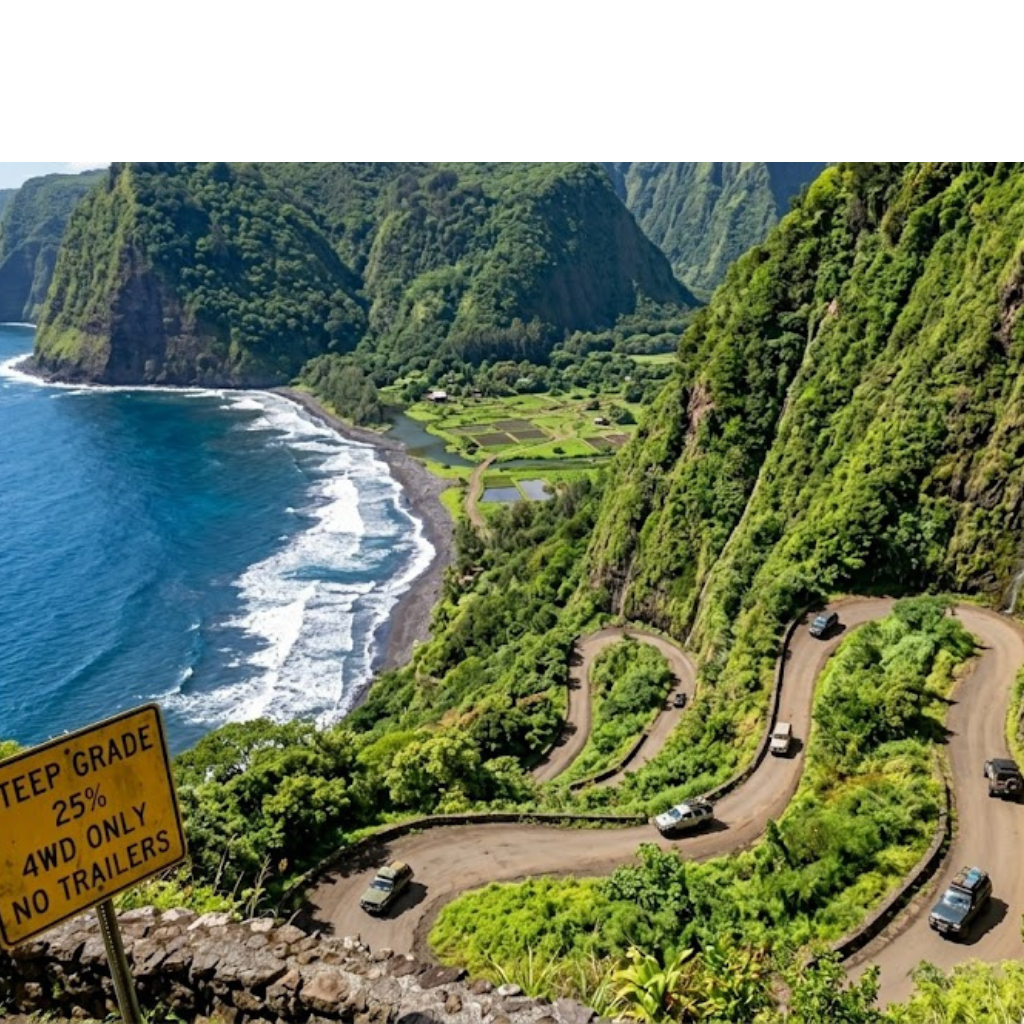
The road descends at a grade between 20 and 38 percent in places, which makes it one of the steepest paved roads in the state of Hawaii. It’s narrow, often one lane, and has no bridges over the rivers and streams at the bottom. You drive through them.
This is exactly why your rental car isn’t the right vehicle for the job, and why attempting to walk down is no longer allowed. Our 4WD shuttles handle the road safely, and our guides know every turn and crossing.
You get to look out the window instead of gripping the steering wheel.
What You See on a Waipio Valley Shuttle Tour
For those wondering, “what is there to do in Waipio”, know that it is truly awe-inspiring. Once you’re on the valley floor, the experience opens up completely. This is what you see when you visit the valley from inside it, not from the lookout above.
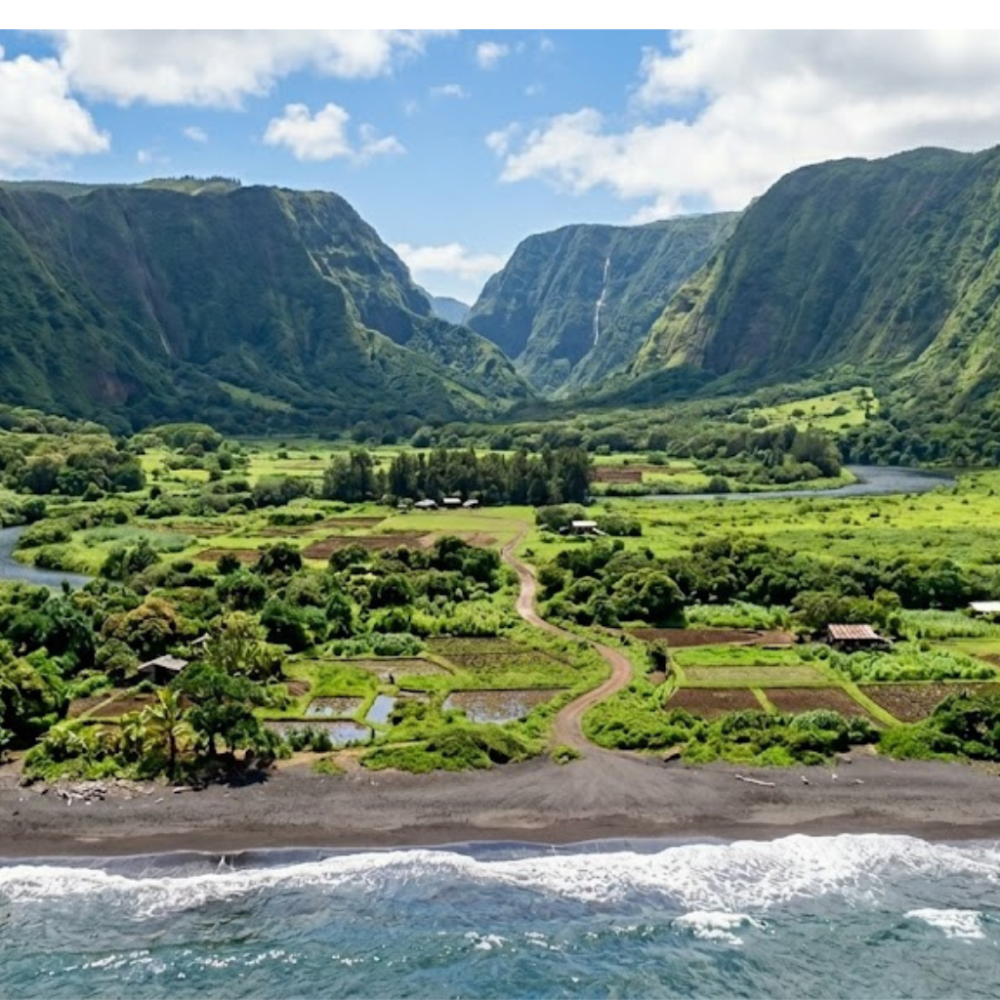
Hi’ilawe Falls is the centerpiece. At 1,200 feet, it’s one of the tallest waterfalls in Hawaii, and it remains visible for much of the tour as you move through the valley. On rainy days, you’ll see additional waterfalls spill from the cliffs on both sides.
The taro fields are something most visitors don’t expect to find as compelling as they do. Taro has been cultivated in this valley for generations. A few families still farm it today. You see the patches up close, learn about the plant’s role in Hawaiian culture, and get a sense of how people have lived and worked this land for centuries.
The rivers cross the valley floor in multiple places, and the shuttle moves through them. It’s a different kind of experience than anything you’ll find at a typical tourist stop.
Wild Horses, River Crossings, and Views From Inside the Valley
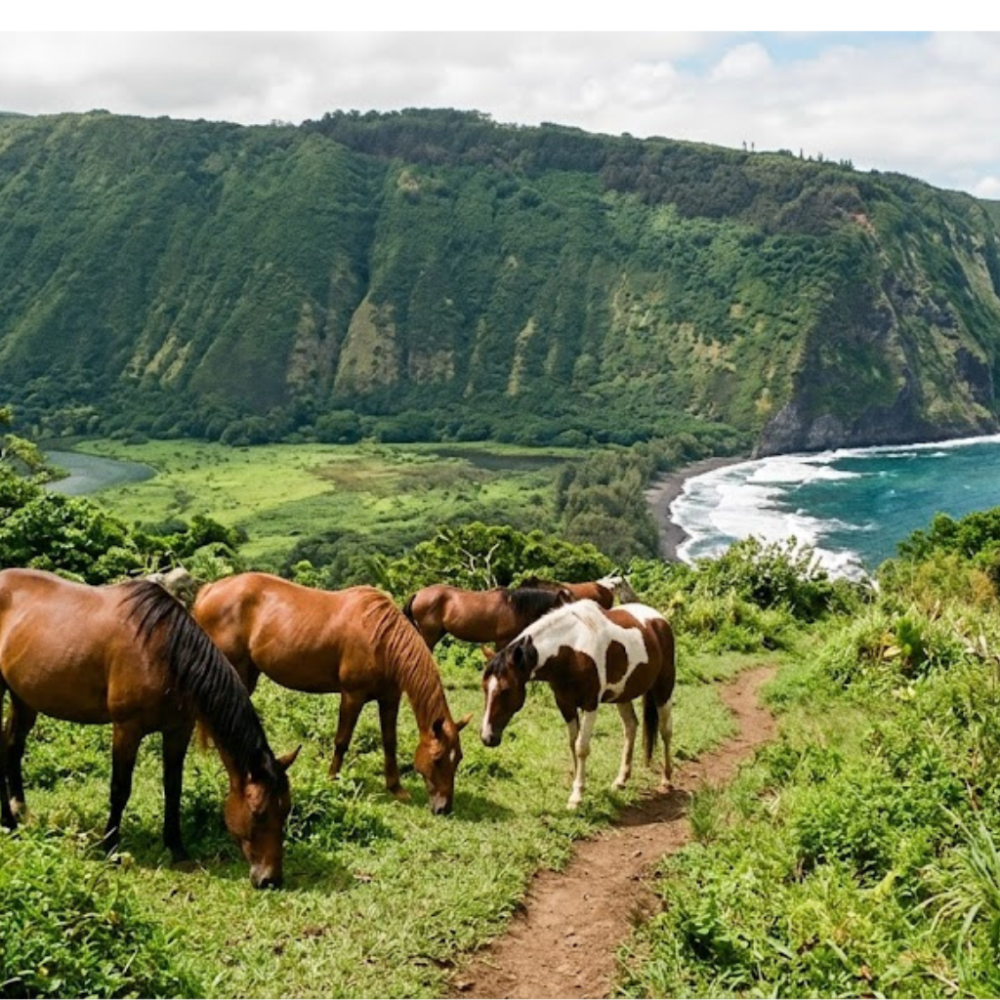
The wild horses of Waipio are a highlight that surprises nearly every visitor. You can’t predict exactly when or where you’ll see them, but they appear often, and they’re not shy. Guests regularly report horses walking right up to the open windows of the shuttle.
You’ll also get views of the valley’s black sand beach and the point where the river meets the ocean.
Those views are only accessible from the valley floor. From the lookout above, you see the valley’s shape. From the shuttle, you’re inside it.
The History and Cultural Significance You Learn on the Tour
Waipio is known as the Valley of the Kings, and that title isn’t decoration. This is where the ruling ali’i of ancient Hawaii lived and governed. King Kamehameha received the war god Kukailimoku here, which set the foundation for his eventual rule over all of the Hawaiian Islands.
Before Western contact, the valley supported somewhere between 4,000 and 10,000 people. There were fish ponds, banana groves, heiau (sacred sites), and a thriving farming community. The 1946 tsunami destroyed most of the settlement, and the valley has been sparsely populated ever since.
Our guides grew up knowing this history, and several of them have lived in the valley themselves. What they share on the tour isn’t a scripted recitation. It’s firsthand knowledge of a place they care about deeply.
What Makes the Waipio Valley Shuttle Different From the Lookout
The Waipio Valley lookout is free, accessible by car, and worth a stop. It gives you a top-down view of the valley’s scale, and on a clear day, you can see the cliffs, the coastline, and the mouth of the river.
But you can’t see the taro fields from up there. You can’t watch the horses graze. You can’t cross the rivers, or stand close enough to feel the size of those cliffs around you.
The shuttle tour puts you at valley level for 105 minutes. That’s a different experience entirely. If you’re asking what is there to do in Waipio Valley beyond standing at a railing and looking down, the shuttle is your answer.
How to Book the Waipio Valley Shuttle and What to Expect
Tours run Monday through Saturday, on the hour. You’ll check in at our location off Honokaa-Waipio Road in Honokaa. Arrive at least 15 minutes before your scheduled time so the shuttle can depart on time.
The tour lasts 105 minutes. All ages can join. There are restrooms at the check-in location, but none in the valley, so plan ahead. Comfortable walking shoes are all you need. Bring water, sunscreen, and a camera.
Booking online at waipiovalleyshuttle.com gets you a discounted rate. Special pricing is available for children ages 3 to 11.
Plan Your Visit to Waipio Valley on the Big Island
From Hilo, take Highway 19 north toward the 43-mile marker, turn onto Highway 240 through Honokaa, and follow it to the end. From Kona, take Highway 190 to Waimea, continue toward Hilo, and turn left near the 44-mile marker toward Honokaa. For more directions.
Many visitors stop in Honokaa town before or after the tour. It’s a short drive from the shuttle location and worth a quick walk around.
Waipio Valley is one of those places that stays with you. The scale of the cliffs, the smell of the river, the quiet of the taro fields, and the horses that wander up to say hello, it all adds up to something that a lookout photo can’t capture.
If you want to know what is there to do in Waipio Valley, the real answer is: come down into it. Book your shuttle tour with us and see the Valley of the Kings from the inside.